In the middle of the last century, in rural Switzerland, there lived a woman who healed people. Between herself and the person who came to her for help, she would place a drawing: a large geometric sheet of graph paper, made with the help of a pendulum. These sheets were never exhibited in her lifetime, and she did not think of herself as an artist; she called herself a researcher. Her name was Emma Kunz. She said her drawings were meant for the twenty-first century, and in 2019 London’s Serpentine Galleries did indeed show them.
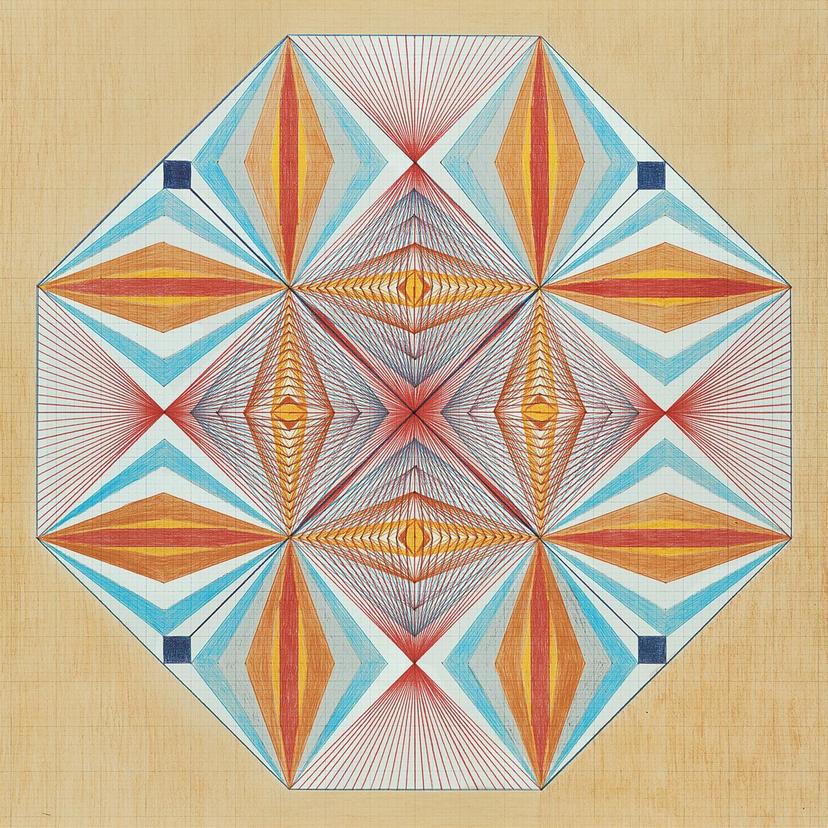
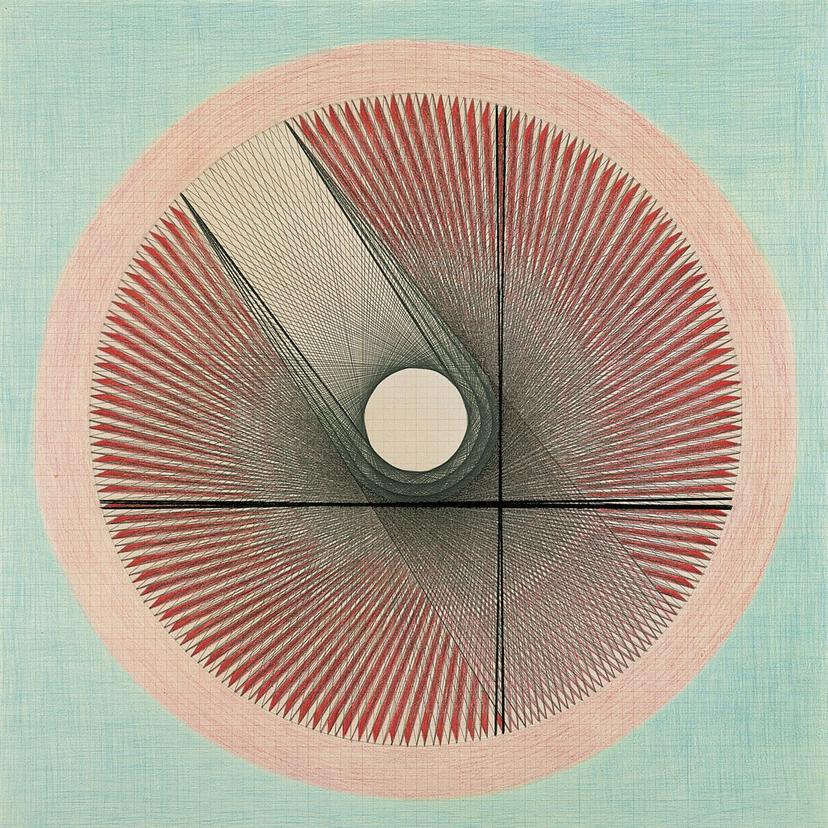
Emma Kunz. Works No. 013 and No. 020. © Emma Kunz Zentrum. Sources: The Art Newspaper, Hyperallergic
When I read about her, I recognise myself. For a long time I did not think of myself as an artist either: my attention was on the very process of making a drawing that reflects what I see in a person and what will help them with whatever brought them to me. Art was a continuation of my work with people and my own path of self-discovery and exploration. Back then I called these drawings mandalas of the subconscious.
Every creator has the right to do whatever they wish. Every artist has their own sources of inspiration and their own reasons for picking up a brush. My source is the spiritual nature of the human being, and then drawings and symbols become keys to finding oneself and one’s inner strength, doors into the vast resources of the subconscious.
An Artist in Form, or in Essence
My attention has always been less on what and how an artist paints IN FORM, and more on what they paint and where it comes from IN ESSENCE. Different artists create from different states. Some create from a personal experience, from pain or an emotion that has seized them in the moment or settled somewhere deep inside, and they put that into the painting. Others create from the soul, conveying states of feeling: joy, innocence, closeness, vulnerability, soulful themes that matter to many. And there are artists who create from the spirit. Such art is called spirit-filled and spirit-giving. It is something greater than you, your thoughts, your life: you contemplate and create together with something, or someone, greater than your personality. This is how paintings of power are born. In their presence people experience something beyond understanding: not just an emotion, but a transcendent experience. The painting itself becomes a point of power. It can change a space and create around itself a field in which certain states arise. It is in this sense that I create art artifacts, which lead a person’s attention, through the unconscious, back to themselves, to who they truly are.
I believe every artist chooses not only an outer direction in art, a style and so on, but also an inner one: what exactly they carry through their art, what their greater purpose is, where their creative force lies, what they want to express and convey, and whether they want to at all (some people paint purely for commercial reasons). It is at this point that a person becomes an artist not in form but in essence: a creator who influences the world and people’s consciousness, their perception, the cultural code and much else, wherever they direct their attention. In this sense art is truly creative, because it carries a spiritual force that unites, transforms, awakens and heals, reaching far beyond the mind. In different periods of history this has looked and been expressed differently, depending on the needs of society at the time, on the development of humanity, on the states of the collective unconscious.
In a way, an artist is like a stage actor: they let everything they paint pass through them. Yet at the same time they are an observer of history, and sometimes a prophet. I would like this essay to help artists see that they are much more than someone who paints, more than someone focused on something narrow; to see and feel themselves more widely. Because for me, an artist truly is a person of power.
What Is the Art of Creation
By the art of creation I mean art driven by an inner call that reaches out to other people: towards healing, towards making their inner or outer world better. In his book Concerning the Spiritual in Art, Wassily Kandinsky called something similar “inner necessity”: there is something in every artist that demands to be expressed.
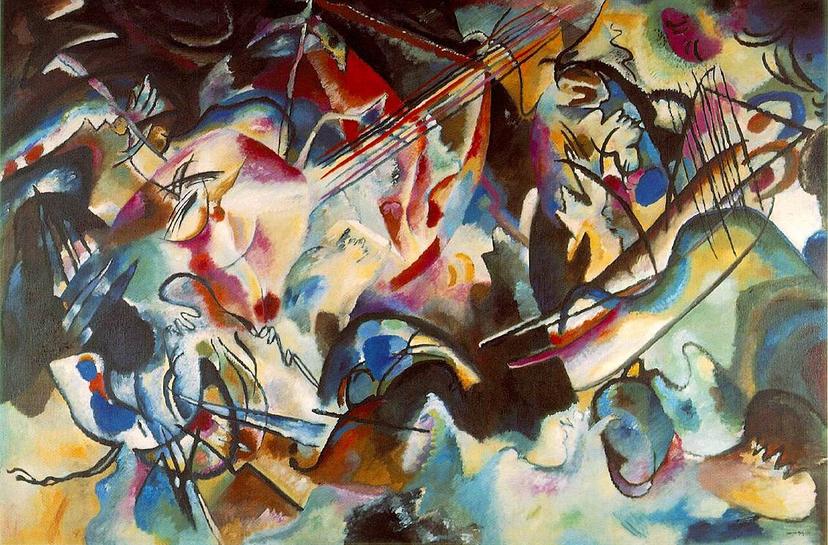
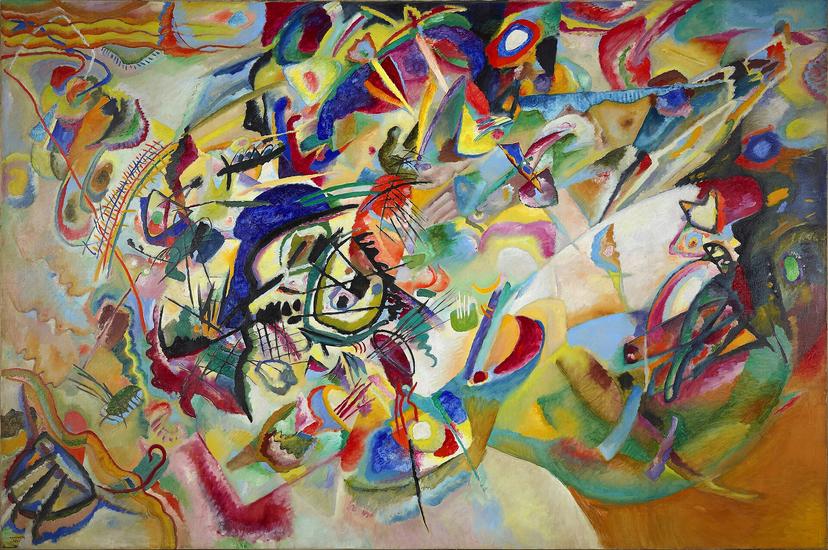
Wassily Kandinsky. Composition VI, 1913, State Hermitage Museum. Composition VII, 1913, State Tretyakov Gallery
The subject can be anything at all. Imagine an artist whose mission is to help people, through art, release emotional burdens and pain, so that the soul can come alive again. This too is creation, because no one can think this way from inside their own pain: pain only creates a resonance with pain, drawing attention back to it again and again, without healing it and without offering any other support.
Such a call is always greater than the artist’s “personal self”. What is born from it stays in other people’s hearts and goes on living in their outlook and their everyday lives. Having touched the art of creation, a person does not remain the same: something touches their heart, wakes them, reminds them of what matters, of what is spiritually precious, of something immortal. They leave changed: in some way better, more whole, lighter, happier, simpler.
That is why such art can be timeless, beyond time and space, just as the spirit is eternal. It may be strange or hard to understand, even out of its time, and still be magnetic. It creates simply by being present. Near it, a person or a space becomes better in some way, more alive and more real, as if the soul unfolds, or the home where the painting hangs comes to life. If the intention lives in the very essence of the artist, and they truly feel that state, then not only skilful figurative painting will heal, but also abstraction, even a single symbol. The painting will touch something inside a person, and they may not even understand why: it is a deep, unconscious process.
Mark Rothko said: “The people who weep before my pictures are having the same religious experience I had when I painted them.” His paintings are often called meditative. In Houston there is the Rothko Chapel, a room of his large dark canvases where people of every faith come to sit in silence. Yet Rothko himself explained that he painted “basic human emotions: tragedy, ecstasy, doom”. People really do sink into his paintings as if into meditation, but what he wanted is better described as a meeting with what is deepest in oneself. Some art carries a familiar light: joy, love, something bright. But there is also creative art that helps a person pass through their darkness, through their pain, without getting stuck in it. Rothko most likely tried, through his art, to come to terms with his own pain. Perhaps he said in paint what he could not say in words. Even so, the trace he left behind helps others today. A painting is like a resonance, a portal into a realm, a space and a state that others cannot reach on their own. Yet many artists never think about this, focusing on form and sales.
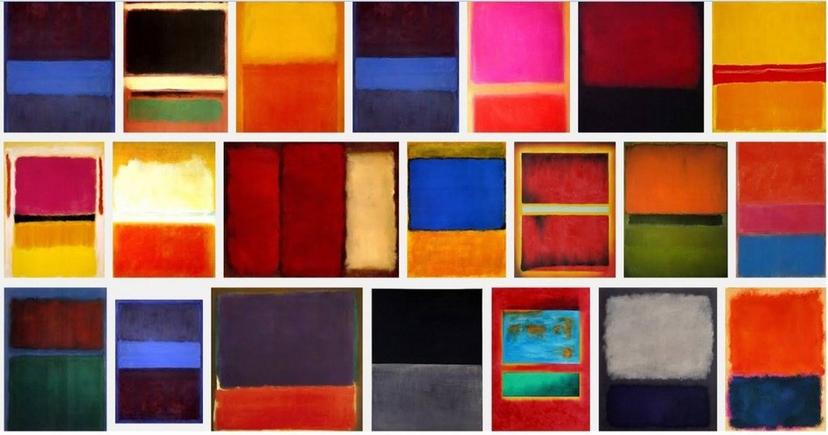
Mark Rothko. Works from different years
Some artists are, by their very nature, carriers of strong creative states such as joy, confidence or love. For such an artist this is a baseline state without which they would not be themselves, and in essence they put it into every painting, however different the paintings may be in form. Others lay the path they have walked into their paintings, like a trail marked out with particular metaphors, so that someone with a similar story can walk it too.
Every painting transmits something, like a still film running beyond our ordinary perception. It tells a story and leads somewhere: into memories, into history, inward or outward, into what the artist intended, and by no means always consciously. But there are many paintings you stand beside and feel as if all your strength had been drained away: you are tired, you have sunk into sadness, into sorrow. That is the reverse side of the art of creation.
The art of witness is a large field of its own: it records difficult periods of history, wars and events, with the message “so that we remember”. Yes, it is part of history, part of us, but we do not have to suffer over the past again and again. The line here is fine, but it is there. If, while contemplating such a work, a person keeps running into that pain, gets stuck in it and never passes through, they leave carrying that heaviness, even if it was not in them before they met the painting. It is not simple, and there are open questions here. It is another matter when an artist paints something hard with the intention that people look and heal from that pain, rather than simply reliving it time after time. That is a completely different message. If a country has lived through enslavement but managed to rise like a phoenix, reviving its people and its spirit, then its art will celebrate the triumph of the spirit, of its values, strength and unity, rather than the pain that happened.
Artists Close to My Heart
I recognise this call in very different people. In style and era they have little in common, yet each of them created for the sake of something greater than the work itself.
Between 1906 and 1915 Hilma af Klint (1862–1944) painted 193 works for The Paintings for the Temple and asked that they not be shown for twenty years after her death. They were first exhibited only in 1986. She was painting for people she would never meet.
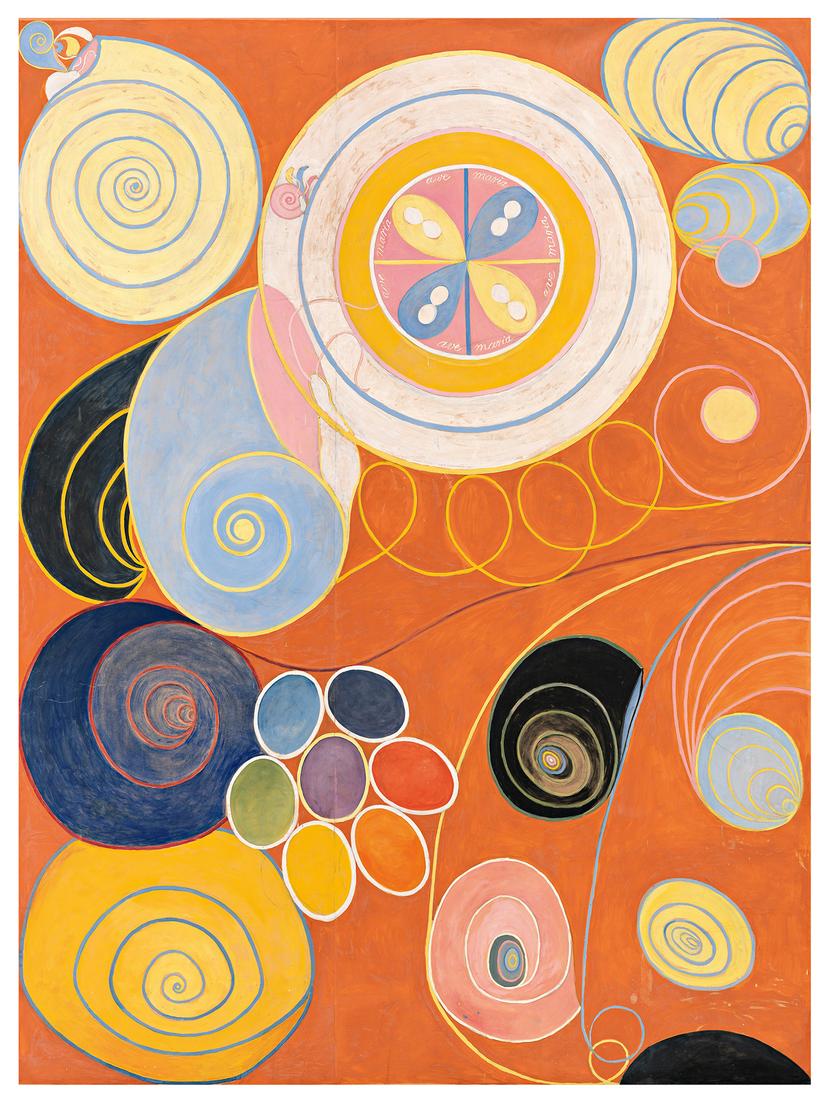
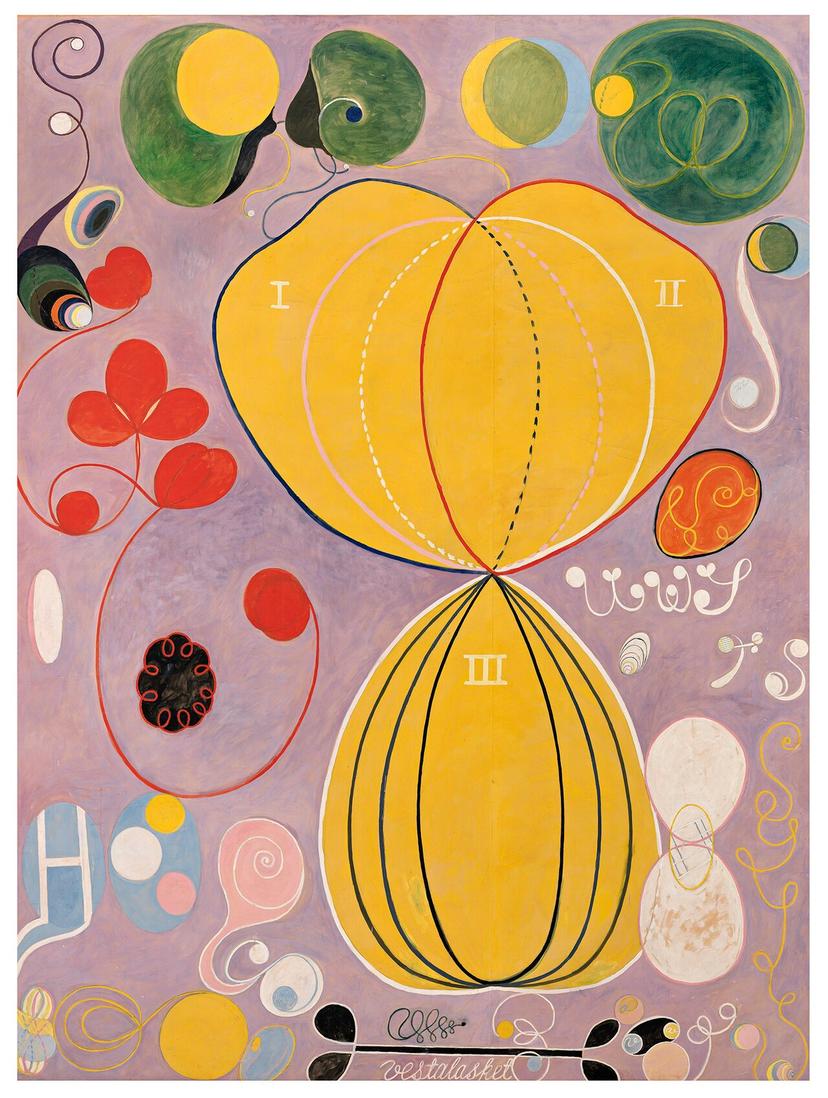
Hilma af Klint. The Ten Largest, No. 3, Youth, and No. 7, Adulthood. 1907. The Hilma af Klint Foundation
A Tibetan thangka, a sacred painting, was commissioned to ask for a long life, to give thanks for a recovery, or to meditate in front of. This example is especially close to my heart: my artifacts are also painted for one particular person, and meditation lets you connect more deeply with a painting’s resonance, as if you were meeting yourself in a painting that works like a mirror.
Some artists paint from their personal story, from their own life. Thangka masters, by contrast, carry on a tradition many centuries old. Behind them stands an immense force, a lineage, which flows into their yantras and sacred mandalas. Here the art itself is a spiritual practice: what matters is the process, the attunement, the state. When true masters paint, they are in deep presence and contemplation at once. Sometimes such paintings become portals to the spirit of teachers, deities, a tradition, a lineage.
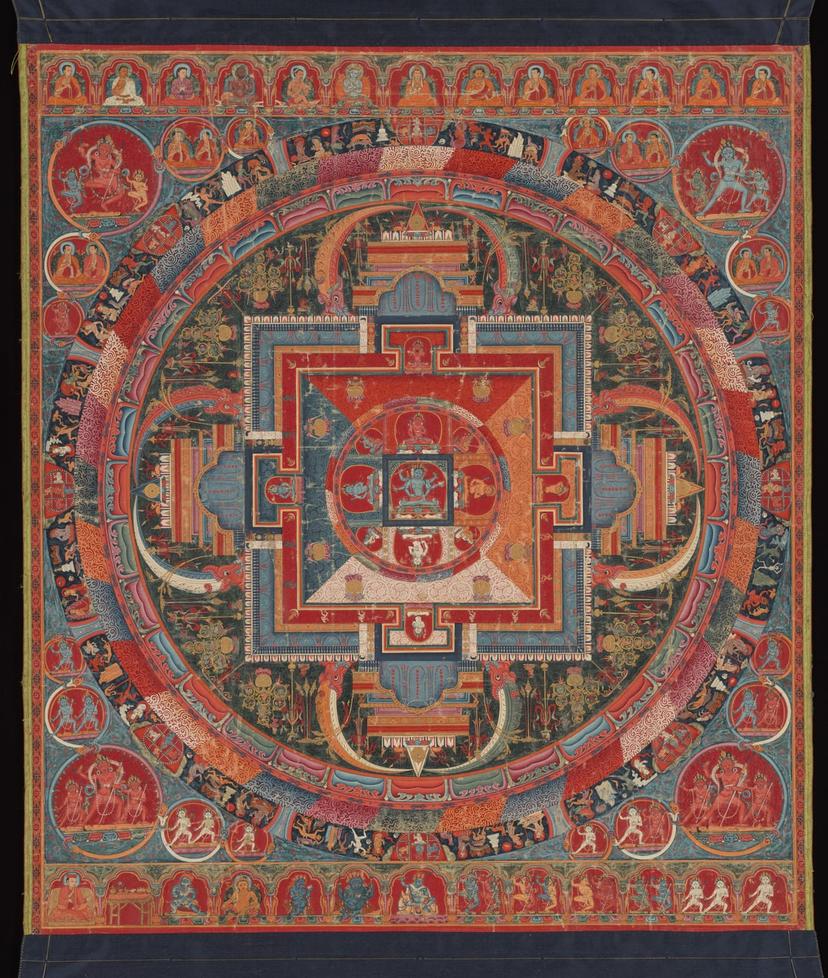
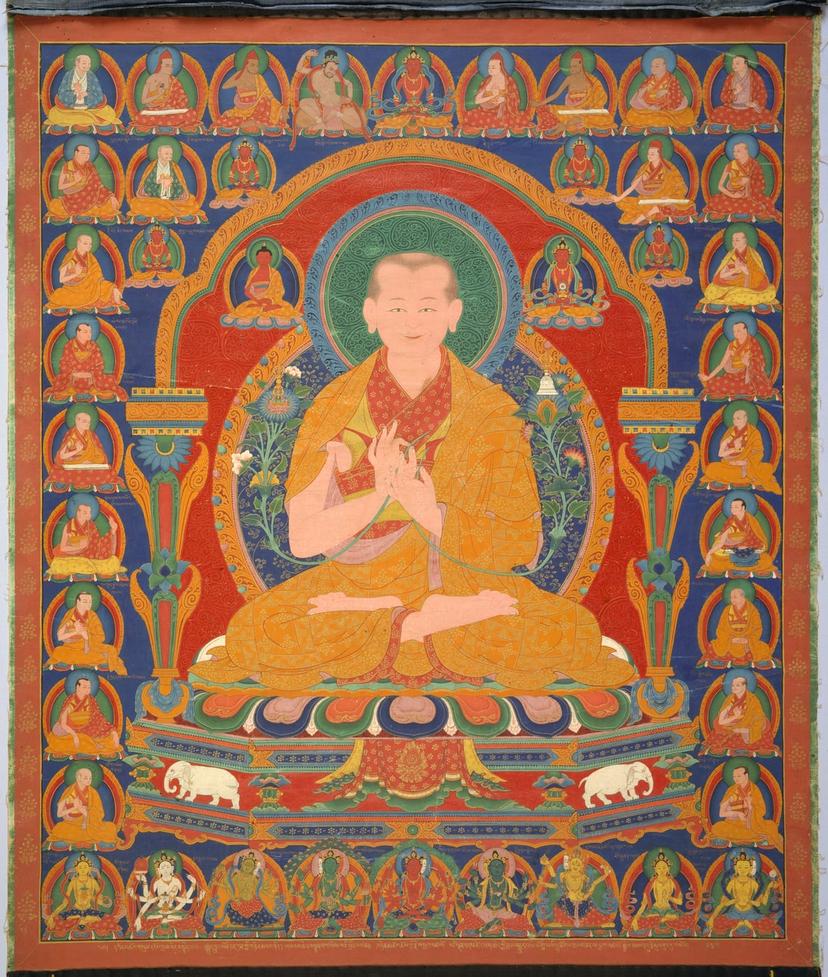
Mandala of Jnanadakini, Tibet, late 14th century. Yong Zin Khon Shogpel, Seventh Abbot of Ngor Monastery, Tibet, 16th century. Both: The Metropolitan Museum of Art
Nicholas Roerich (1874–1947) painted more than seven thousand pictures and worked for many years in the Himalayas, but his creation went far beyond the canvas. He proposed a pact for the protection of culture that put monuments and museums above military necessity; in 1935 it was signed by twenty-one nations of the Americas. His paintings have a particular depth: you contemplate them and your attention travels far deeper than what is painted; you feel, you expand.
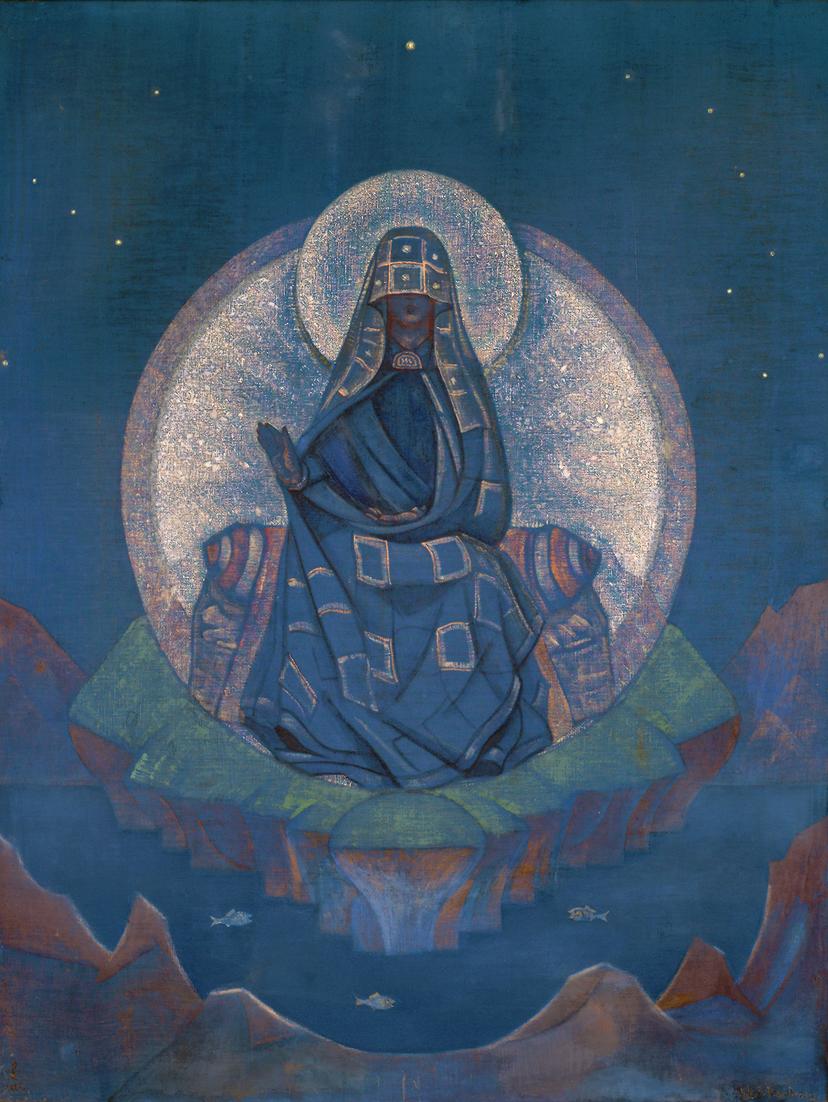
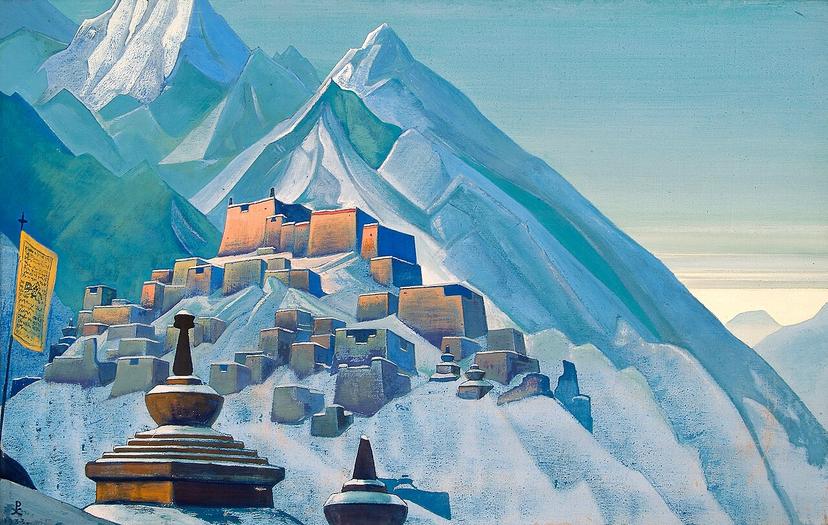
Nicholas Roerich. Mother of the World, 1924. Tibet. Himalayas, 1933
Some artists went through severe crises or serious illness, after which a new chapter began in their art, with a deeper context and state. This is what happened to Henri Matisse. In 1941 he underwent surgery for cancer, and from then on he spent most of his time in bed or in a wheelchair. He himself called the last fourteen years of his life “a second life”: that was when his most luminous works appeared. Long before his illness, in 1908, he wrote that he dreamed of “an art of balance, of purity and serenity, devoid of troubling or depressing subject matter”, one that would soothe a person “like a good armchair which provides relaxation from physical fatigue”.
At seventy-seven he agreed to create a chapel for the Dominican sisters in Vence. The request came from Monique Bourgeois, who had once nursed him and later entered the convent. From 1947 to 1951 he designed everything: the building, the stained glass, the murals, the altar, the priests’ vestments, drawing with a brush tied to a long pole. He considered this chapel his masterpiece.
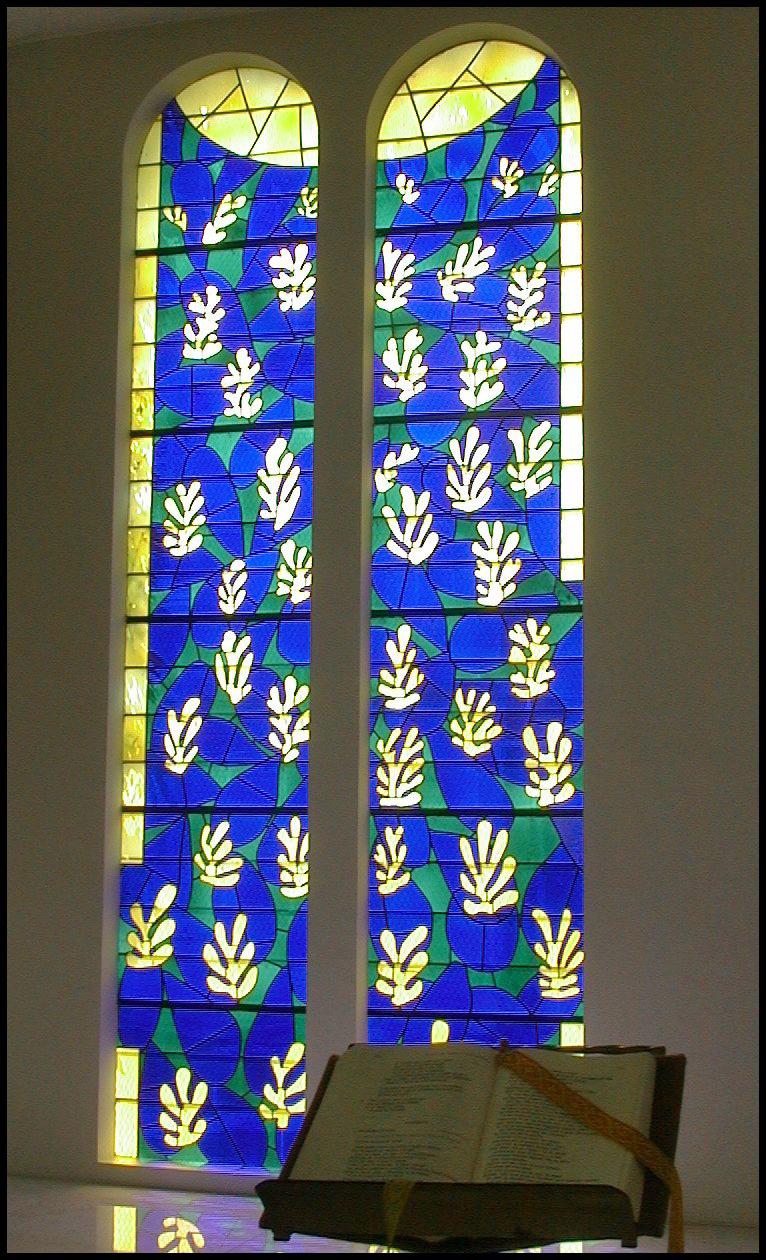
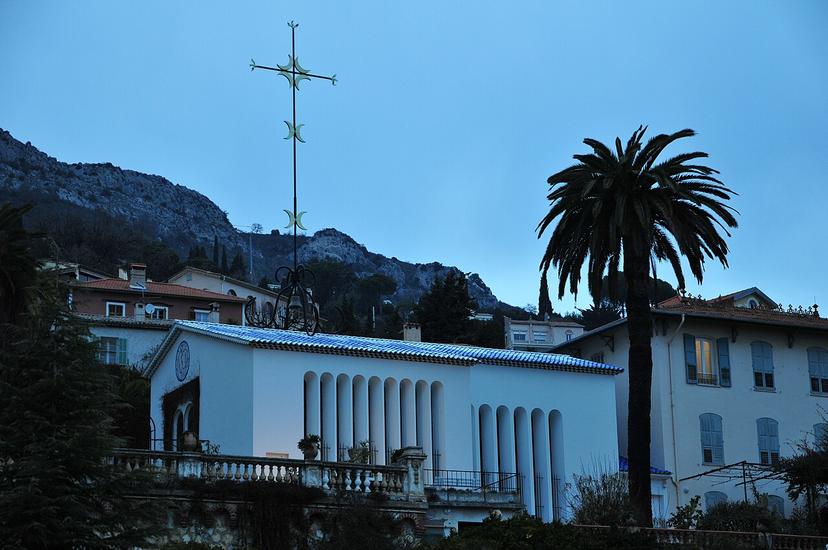
Henri Matisse. The chapel in Vence: stained glass and exterior. Photos: Monica Arellano-Ongpin, CC BY 2.0; m-louis, CC BY-SA 2.0


Among contemporary artists, I feel a kinship with Olafur Eliasson and Mariko Mori. For me they are striking examples of creation and of bringing spirituality into art today.
Olafur Eliasson (born 1967) works with light in the most literal sense. In 2003, at Tate Modern in London, he lit a huge artificial sun, and people lay down on the floor beneath it, gazing up at the mirrored ceiling. In 2012, together with the engineer Frederik Ottesen, he created Little Sun, small solar-powered lamps for places without a reliable electricity supply. Such a lamp, in his words, gives a person the feeling of having resources and of being powerful. In his essay “Why art has the power to change the world” he writes: “Art does not show people what to do, yet engaging with a good work of art can connect you to your senses, body, and mind.” This resonates deeply with me: art gives a person back a sense of themselves.
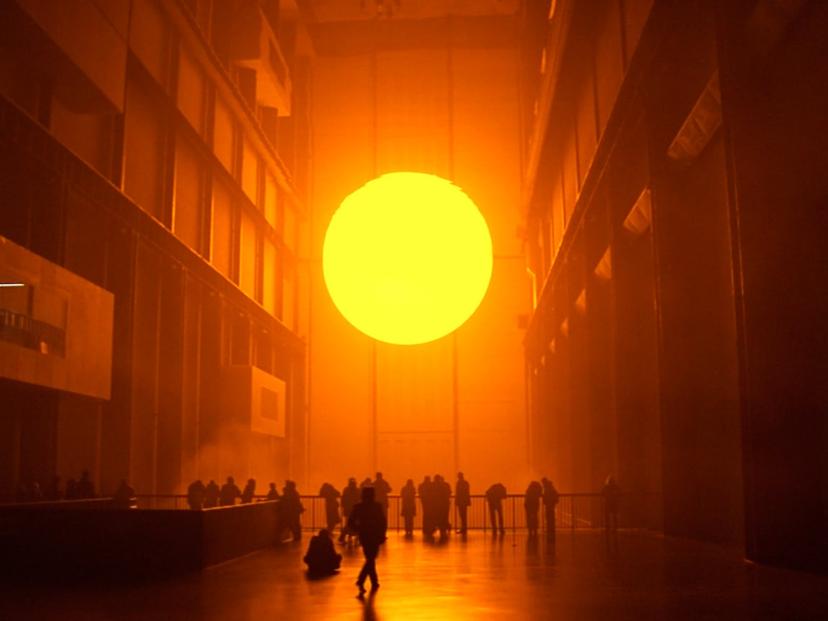
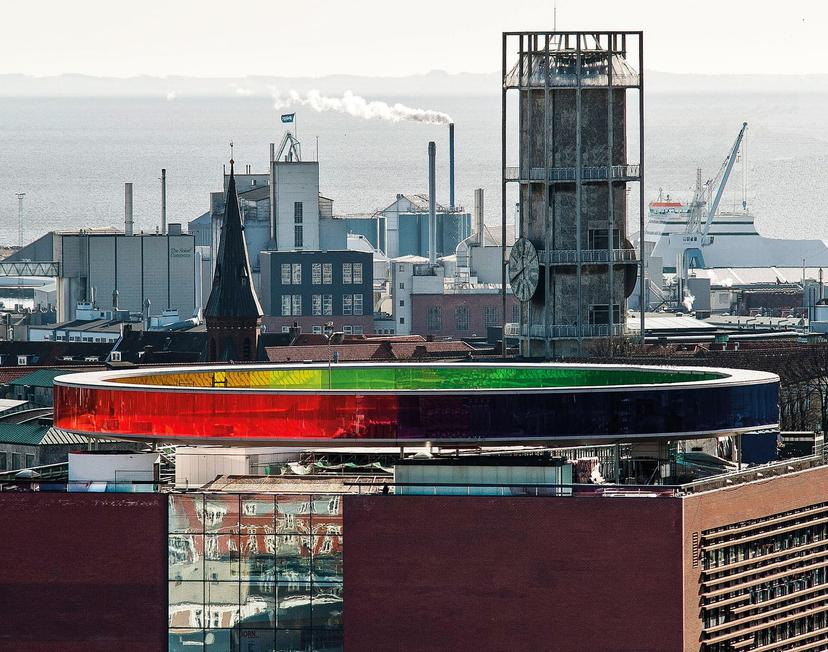
Olafur Eliasson. The weather project, Tate Modern, 2003. Photo: wonderferret, CC BY 2.0. Your rainbow panorama, ARoS, Aarhus. Photo: Ssjensby, CC BY-SA 4.0


Mariko Mori (born 1967 in Tokyo) says: “We look separated, but we are all one and we are all connected.” In 2010 she founded the Faou Foundation to create six works in different corners of the world, each an homage to the nature of its site. Two already stand. On the Japanese island of Miyako there is the Sun Pillar, whose shadow stretches across the bay on the winter solstice, and the Moon Stone, a translucent sphere that changes colour with the tides. In Brazil, above a waterfall, stands Ring: One with Nature, which shifts from blue to gold in the sunlight. For me this is unity itself, one of the spiritual qualities.
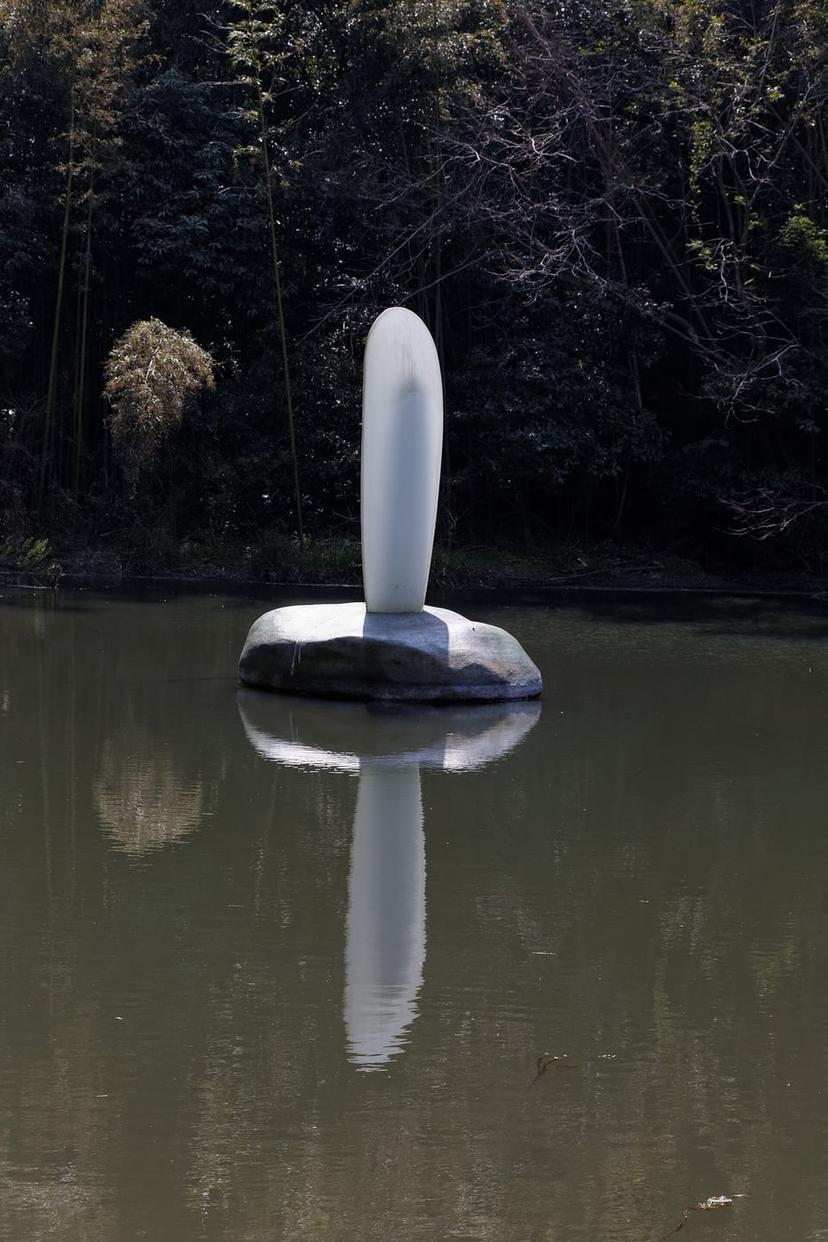
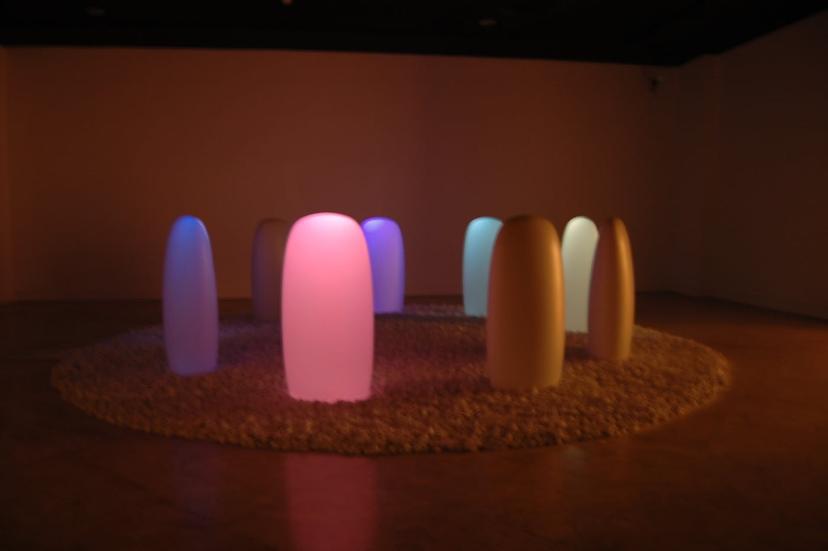
Mariko Mori. Tom Na H-iu. Photo: KimonBerlin, CC BY-SA 2.0. A work shown in Rio de Janeiro. Photo: Monica Kaneko, CC BY-SA 2.0


For me, Vera Atlantia is an example of luminous creation. For more than fifteen years she has brought together art, meditation and self-inquiry. She paints in an old technique that makes a painting glow from within. She twice completed a three-week seminar in Italy with the visionary artists Laurence Caruana and Amanda Sage, and went on to join the founding faculty of the Vienna Academy of Visionary Art. Her paintings are born from visions and meditation, as mine are. She used to paint angels and worlds revealed to the inner eye; now she paints nature as a living intelligence. She says: “When I create, I feel one with the Creator,” and “Art is a mirror of the soul, revealing what lies beneath ordinary perception, inviting the viewer into contemplation and wonder.” Her path runs through meditation and self-inquiry, which is why her paintings carry light.
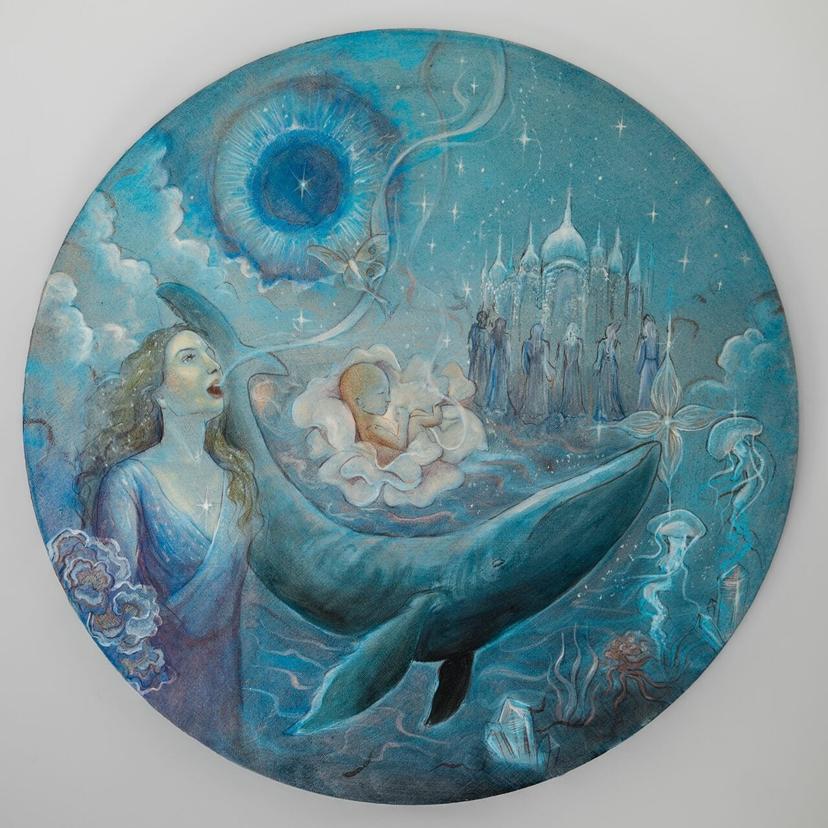
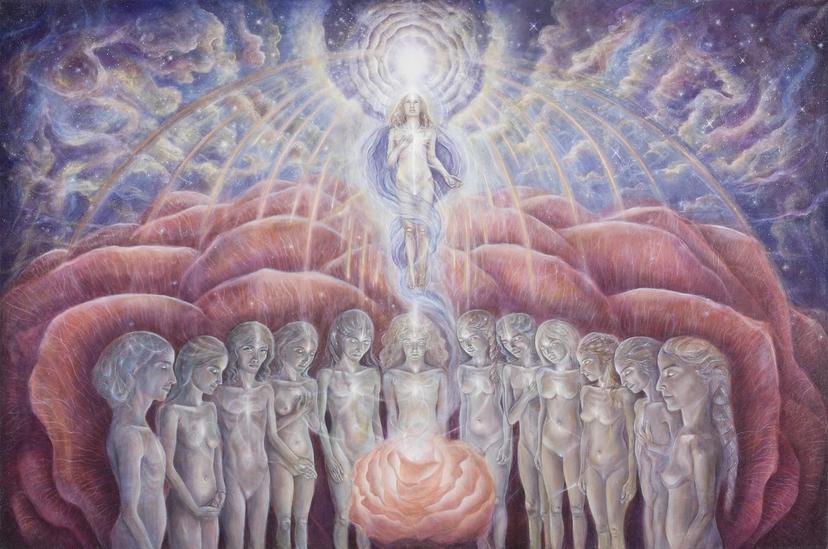
Vera Atlantia. Song of Oneness and Heart Rose. Source: veraatlantia.com
I also feel a kinship with Autumn Skye from Canada. She grew up amid Canada’s wild landscapes, travelled widely, taught herself to paint, and now lives and works in the temperate rainforest of British Columbia. She describes her practice as a meditative dialogue between observation and intuition. Alex Grey wrote that her work “reveals hidden spiritual forces” and that its clarity of line and form “is drawn from the depths of a mystic heart that sees the potential of humanity in a sacred world.” Since her earliest memories, she says, she has felt “a creative fire” and “an unyielding mission to share inspiration with the world.”
In her words: “Art can soothe the wounded heart, rekindle vitality, and awaken joy. It speaks a language older than words, reaching the emotional subconscious where healing and truth reside.” Of her work she writes: “Each piece is a prayer, a dialogue between spirit, matter, and the mystery of existence. This work is my offering: a gift from spirit, through my heart and hands, to you. May it awaken remembrance of your own inner knowing, creative essence, and resilient light.”
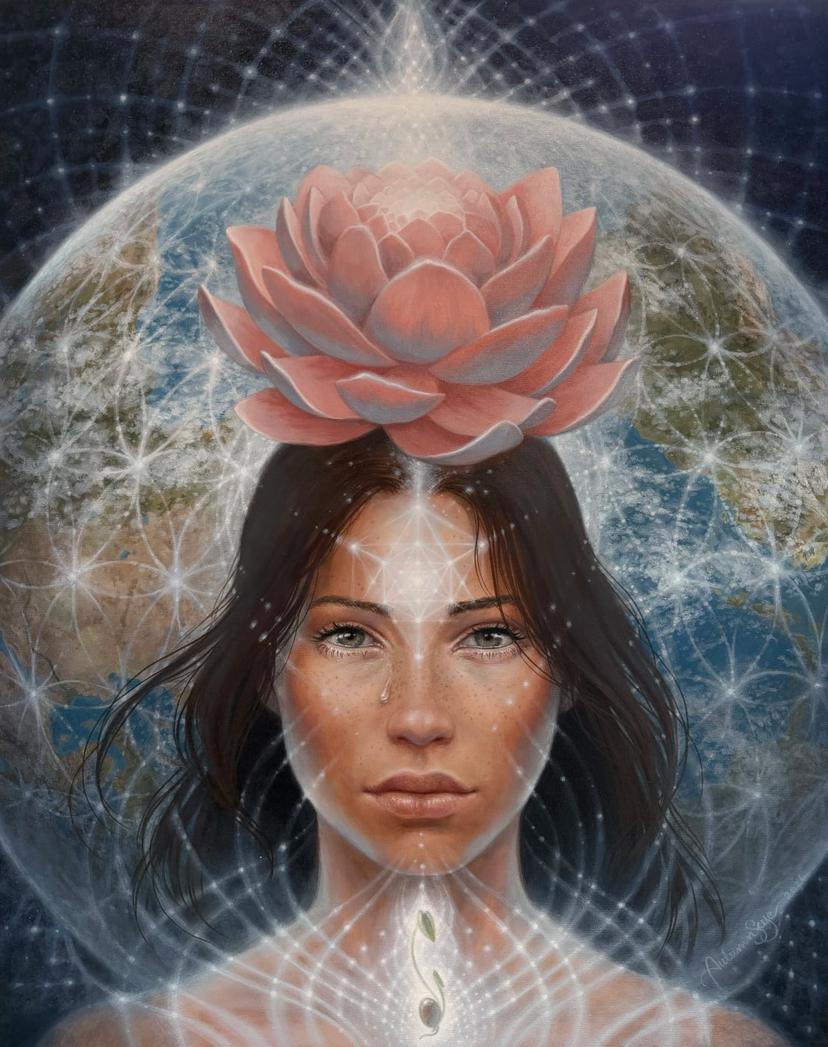
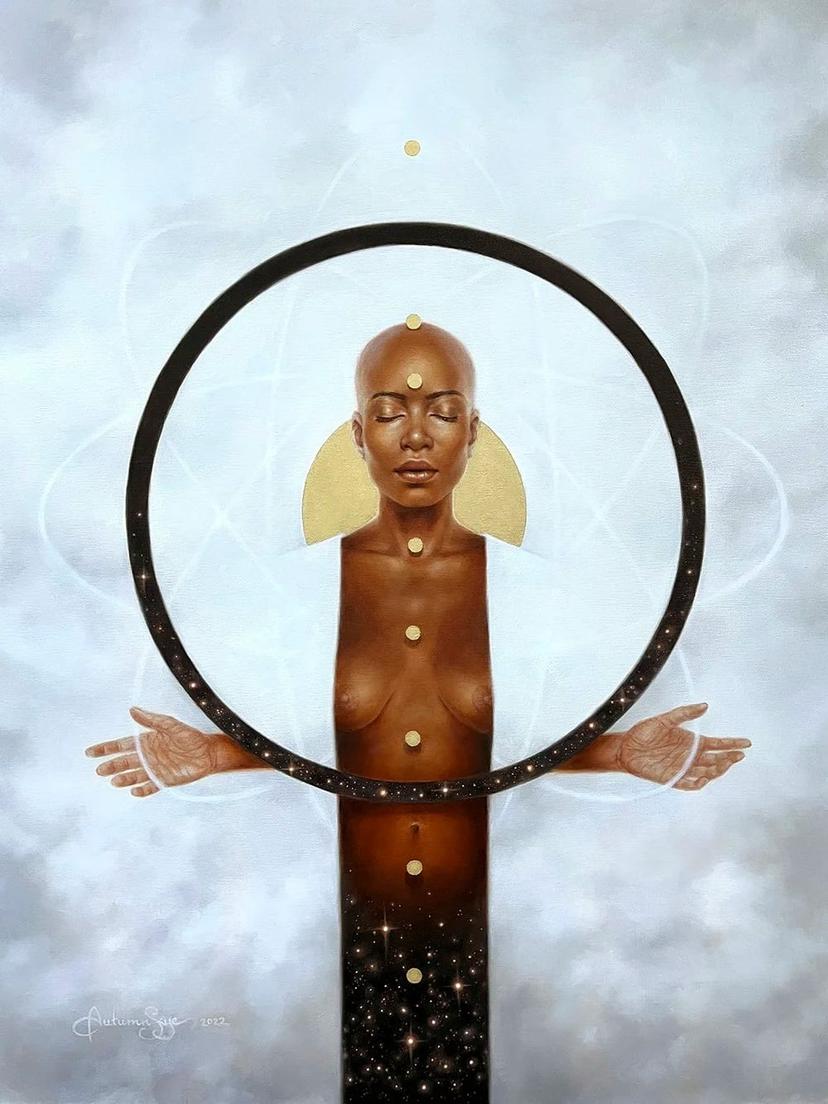
Autumn Skye. Healing Seed and Creation. Source: autumnskyeart.com
Every Painting Is a State
For me every painting is a state and a path, and, as I have written about neo-symbolism, what interests me is precisely the creative potential of art, its power to transfigure and transform. Of course, there is also creative destruction, destruction for the greater good, when something new must be built, but only if it truly is that in essence: then the light will survive even in the deepest darkness and show the way. For me, the process of painting is akin to alchemy. Such a painting does not plunge a person into their pain and fears, but it does not ignore them either. It leads them through, further and deeper, into strength, clarity and the fulfilment of their potential.
This is when a person’s sense of being alive returns: their will, their desires, their feelings, their unconditional inner support; when they feel the answers for themselves and see where to go. For me, art is a living force of creation and one of many paths back to one’s true self. I am happy to create, and to be among kindred spirits.